The Effect of Visual Depth on the Vergence-Accommodation Conflict on 3D Selection Performance within Virtual Reality Headsets


Abstract
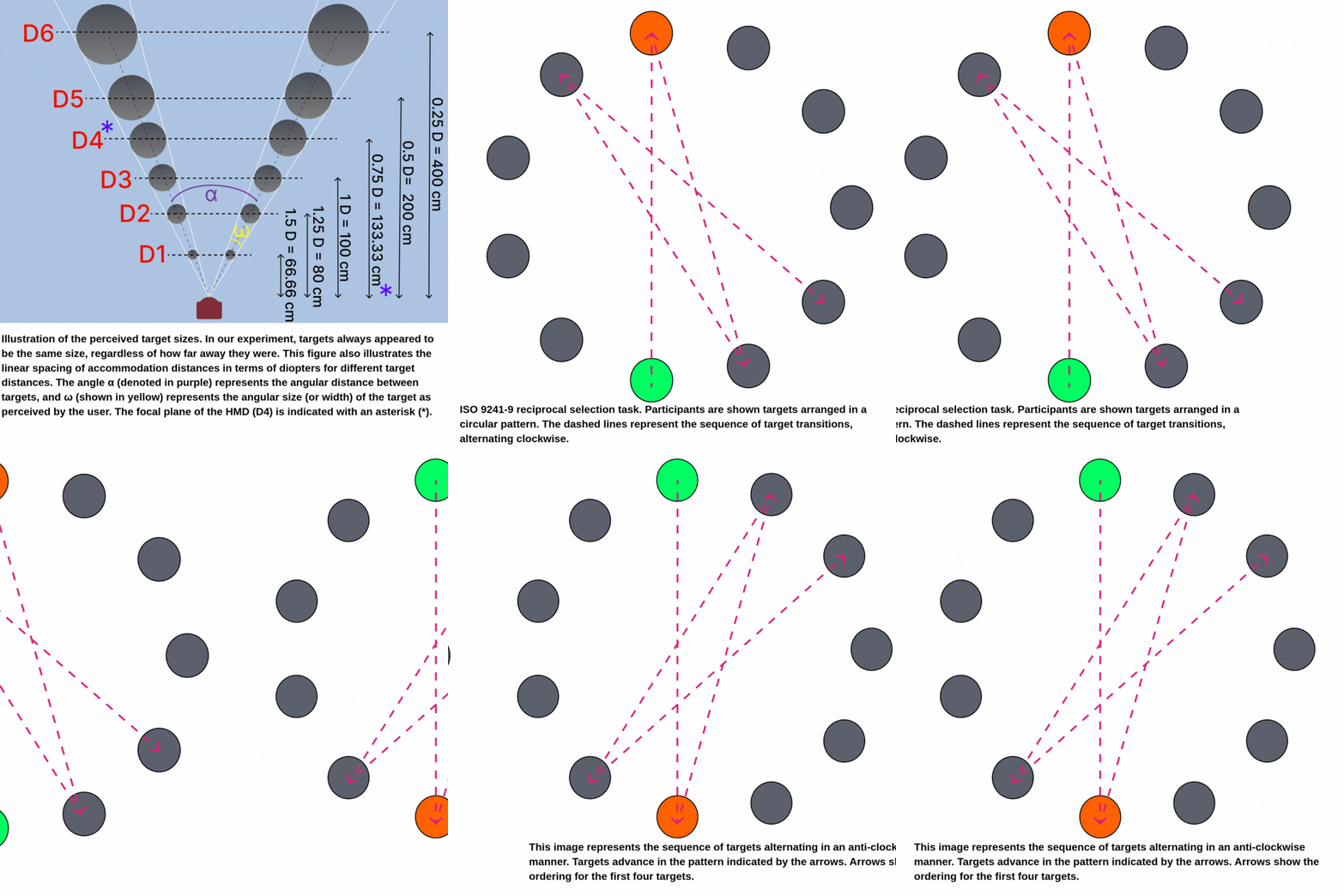
Prior studies have shown that the vergence-accommodation conflict negatively affects the interaction performance in virtual reality (VR) and augmented reality (AR) systems, particularly as object depth increases. This paper examines user selection performance across six different visual depths. Through a study closely resembling prior research, eighteen participants participated in an ISO 9241:411 task with six different depth distances. We observed that with higher depth values, selection times increased, while the throughput performance of the participants decreased. Based on this finding, we propose a Fitts' law model based on the focal distances, which models pointing times in VR and AR systems with substantially higher accuracy. We hope that our findings aid developers in creating 3D user interfaces for VR and AR that offer better performance and an improved user experience.
Methodology
Eighteen participants completed an ISO 9241-411 multidirectional target selection task in VR across six visual depth levels (0.25 D, 0.50 D, 0.75 D, 1.00 D, 1.25 D, and 1.50 D) to evaluate selection performance under varying vergence-accommodation demands.
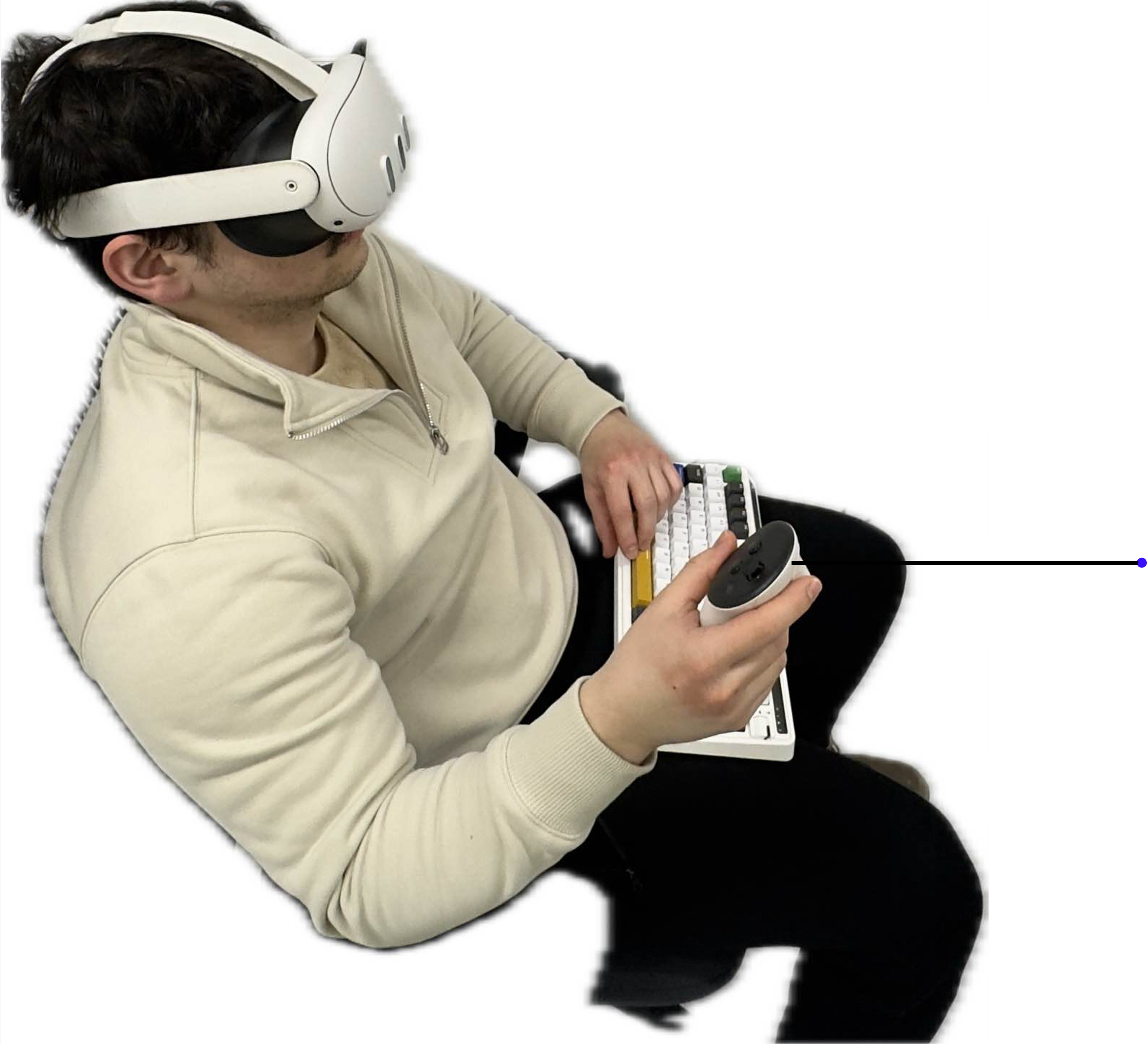
Participant performing the 3D target selection task in virtual reality.
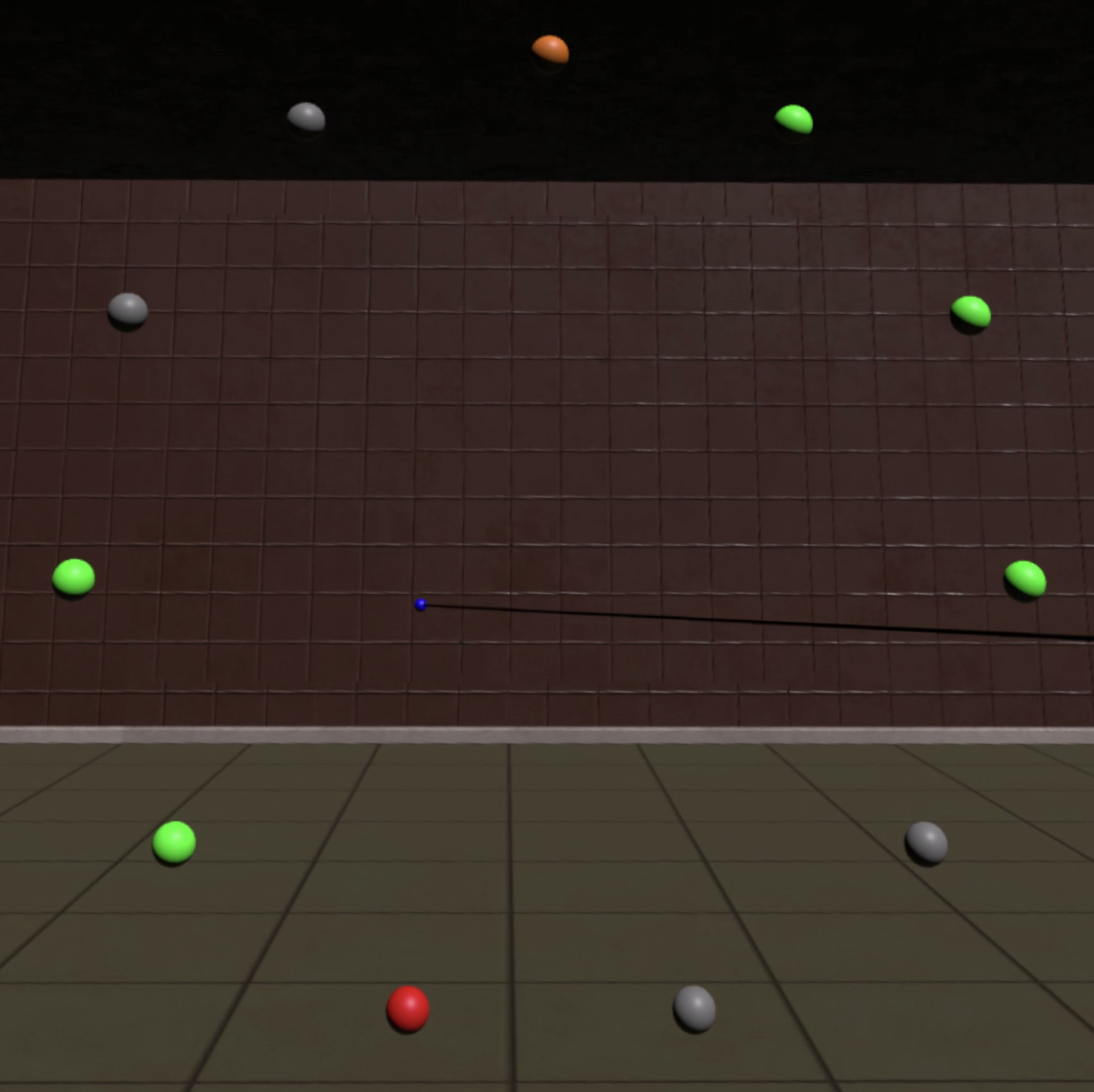
Virtual environment setup showing target placement across six visual depth distances in diopters.
Results
As visual depth increased (lower diopter values), movement time and error rates increased while throughput decreased. We proposed a diopter-based Variation in Diopters (ViD) Fitts' law formulation that models 3D selection times across depths with significantly higher predictive accuracy than traditional models.
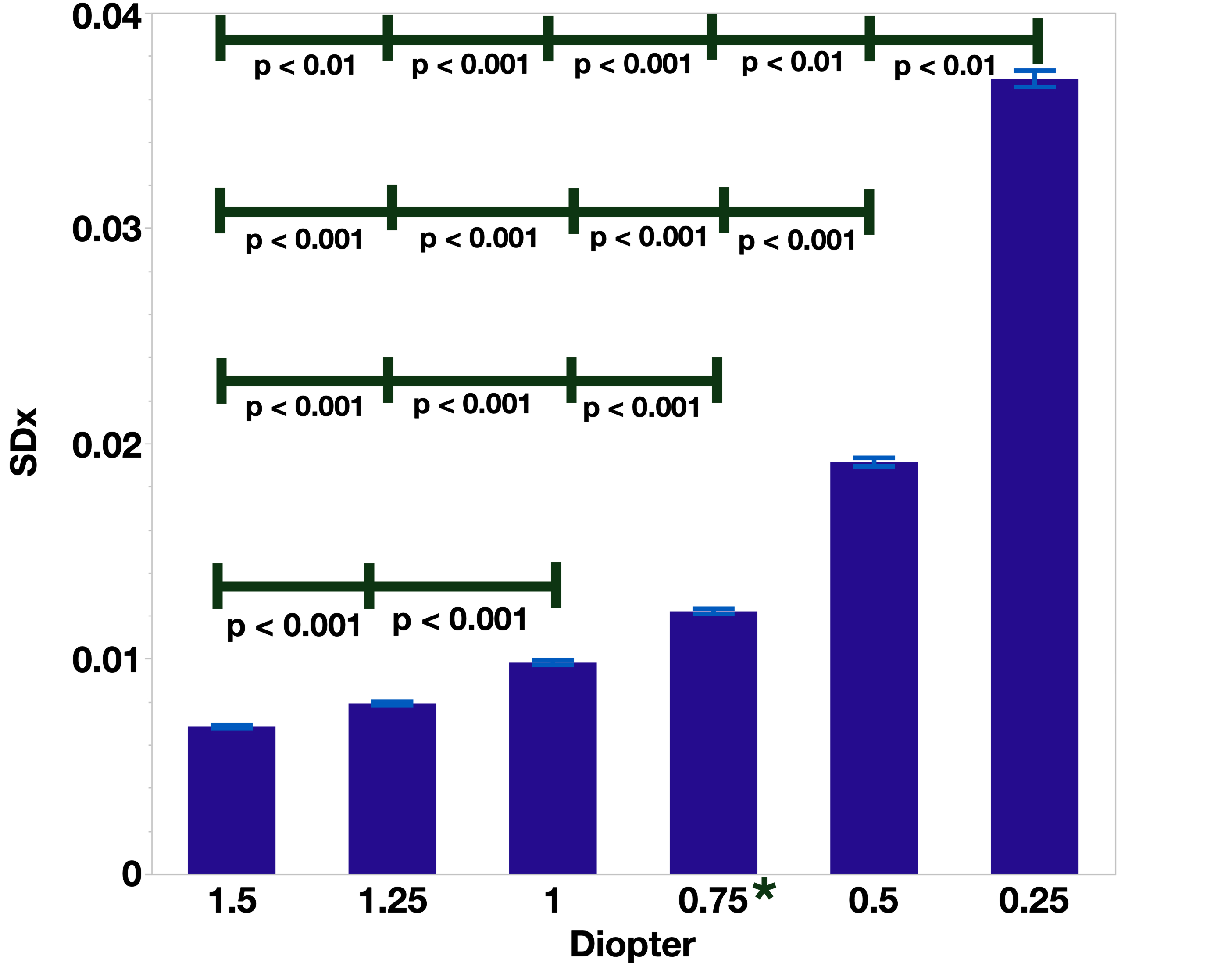
Selection accuracy / spatial variability (SDx) along the primary task axis across six visual depth conditions.
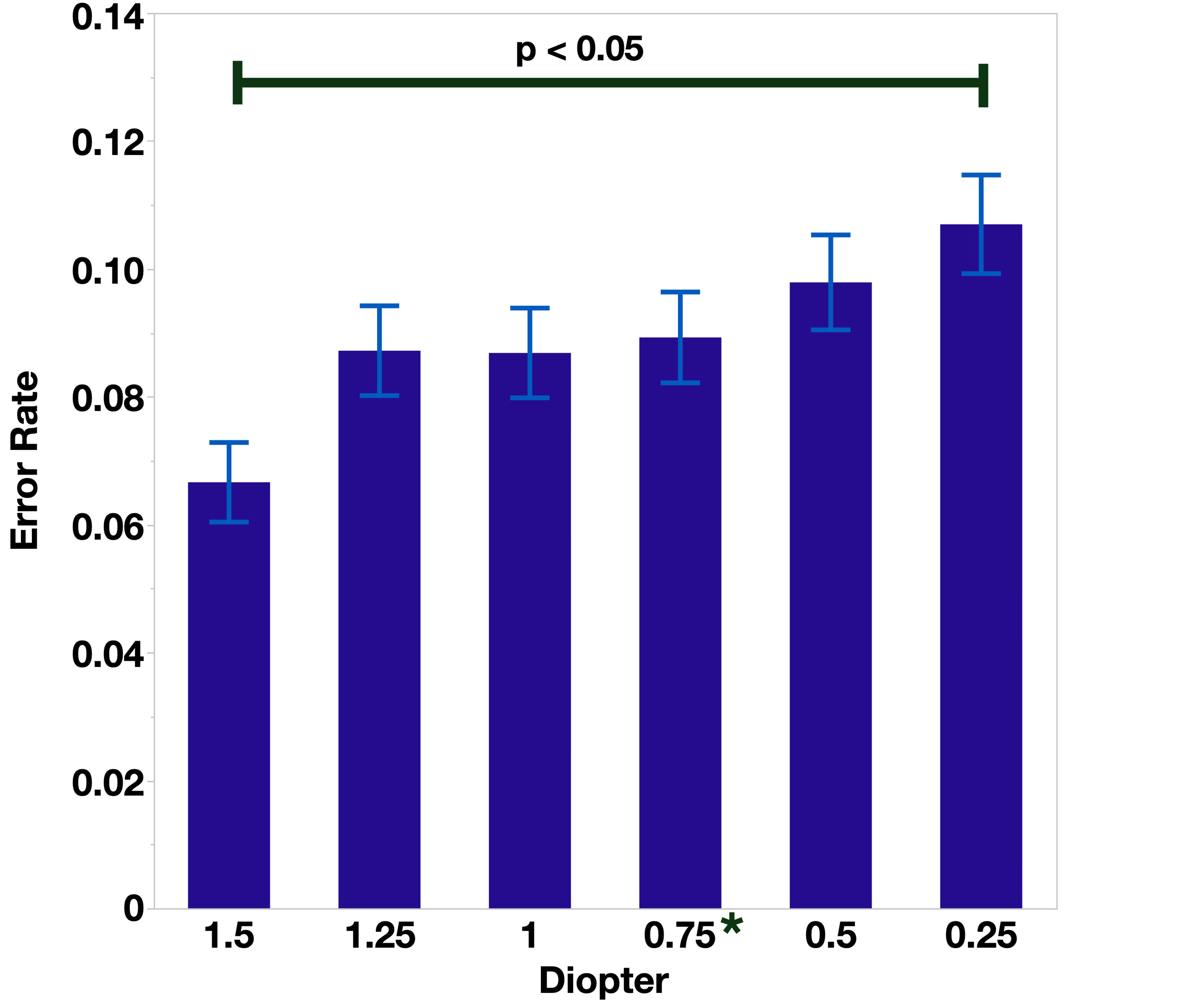
Error rate across six depth distances in diopters.
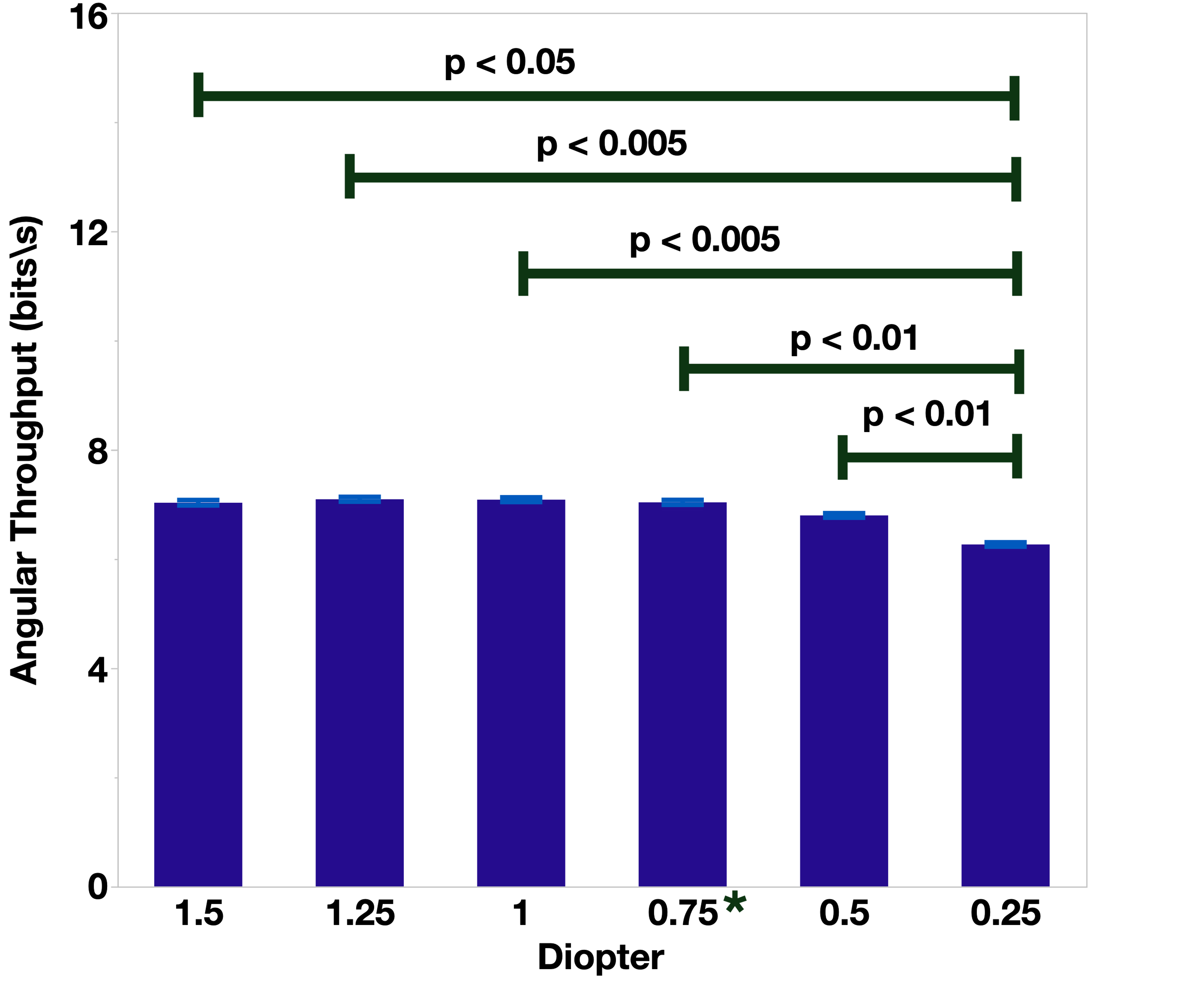
Angular throughput across visual depth conditions.
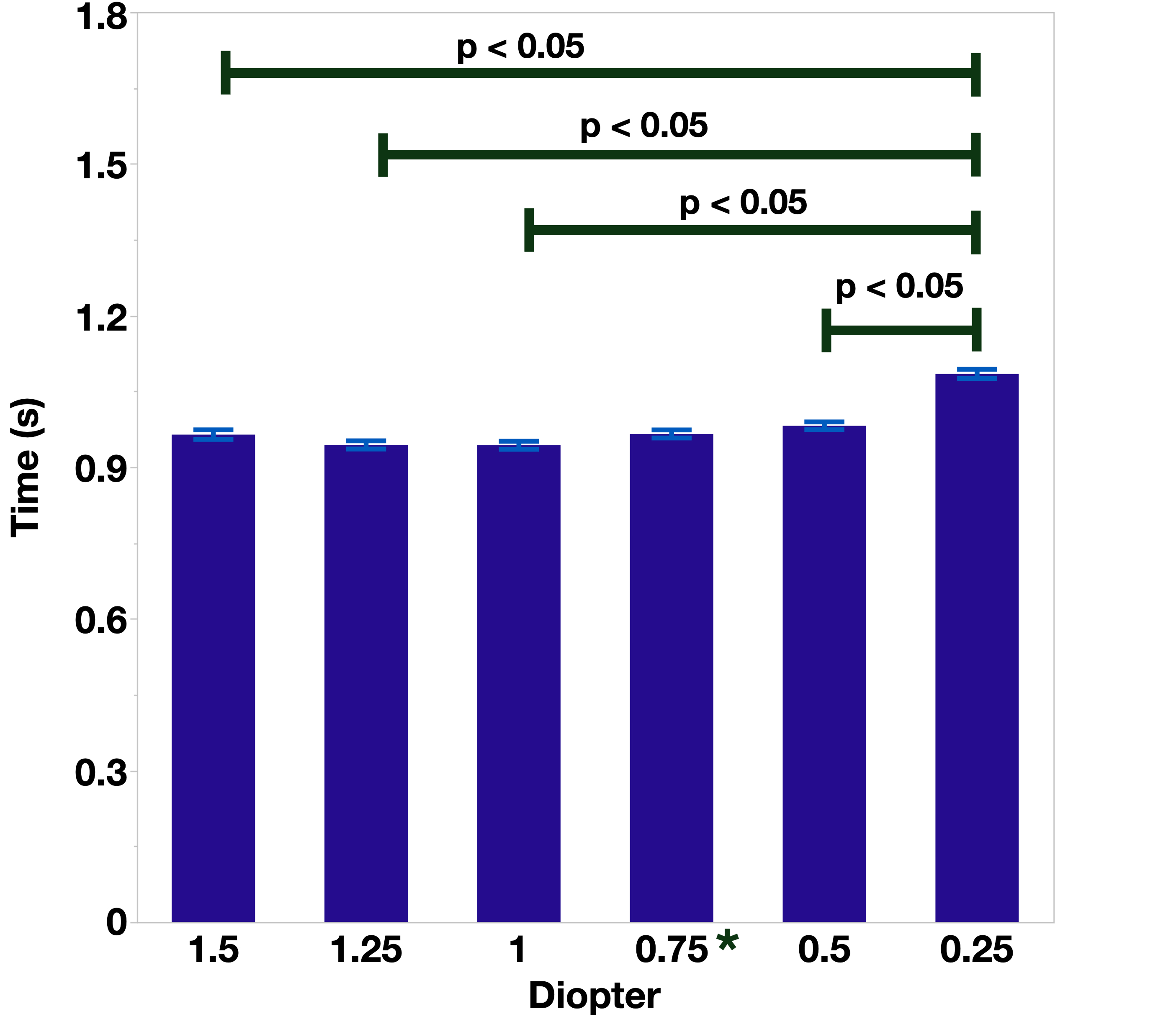
Task completion / movement time across visual depth conditions.
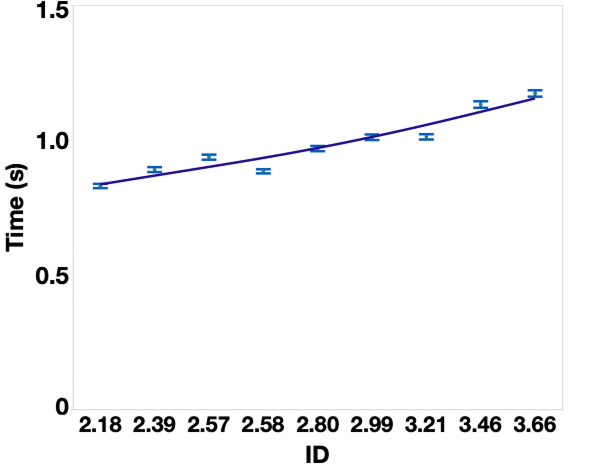
Standard Fitts' law linear regression model fit across depth conditions.
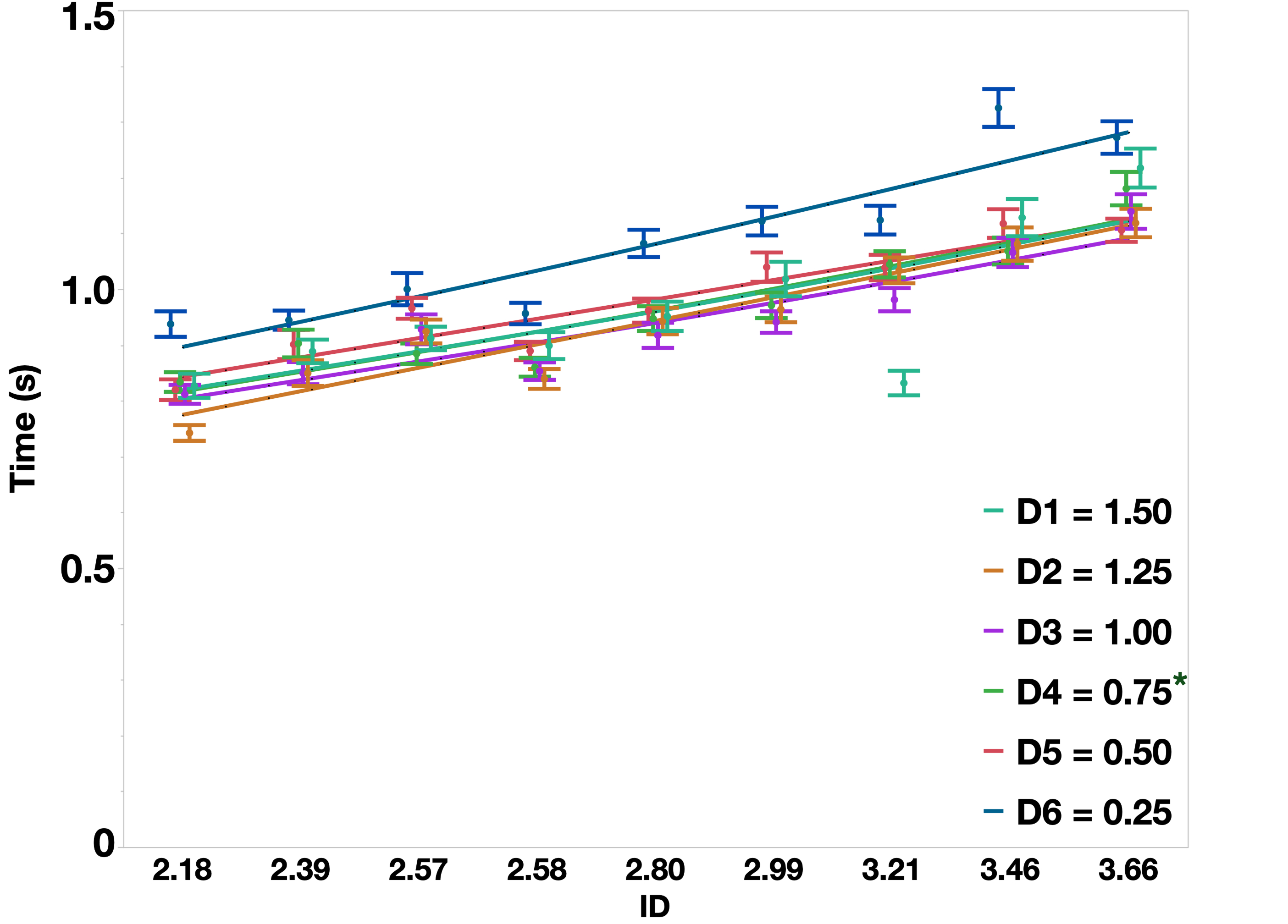
Diopter-aware Variation in Diopters (ViD) Fitts' law model fit comparison across visual depths.
Application & Implications
Incorporating optical depth into 3D interaction models allows UI designers to optimize element placement and predict selection performance across varying distances in VR and AR headsets.
Design Guidelines:
- Account for optical focus demand (in diopters) when positioning interactive 3D elements in VR/AR.
- Place primary interactive elements near the display focal plane to maximize throughput and minimize selection errors.
- Utilize depth-aware Fitts' law formulations (such as ViD) for accurate predictive modeling of 3D pointing.
BibTeX
@article{bashar2025depthvac,
  author = {Bashar, Mohammad Raihanul and Barrera Machuca, Mayra Donaji and Stuerzlinger, Wolfgang and Batmaz, Anil Ufuk},
  title = {The Effect of Visual Depth on the Vergence-Accommodation Conflict on 3D Selection Performance within Virtual Reality Headsets},
  journal = {The Visual Computer},
  publisher = {Springer},
  year = {2025},
  doi = {10.1007/s00371-025-03990-x}
}